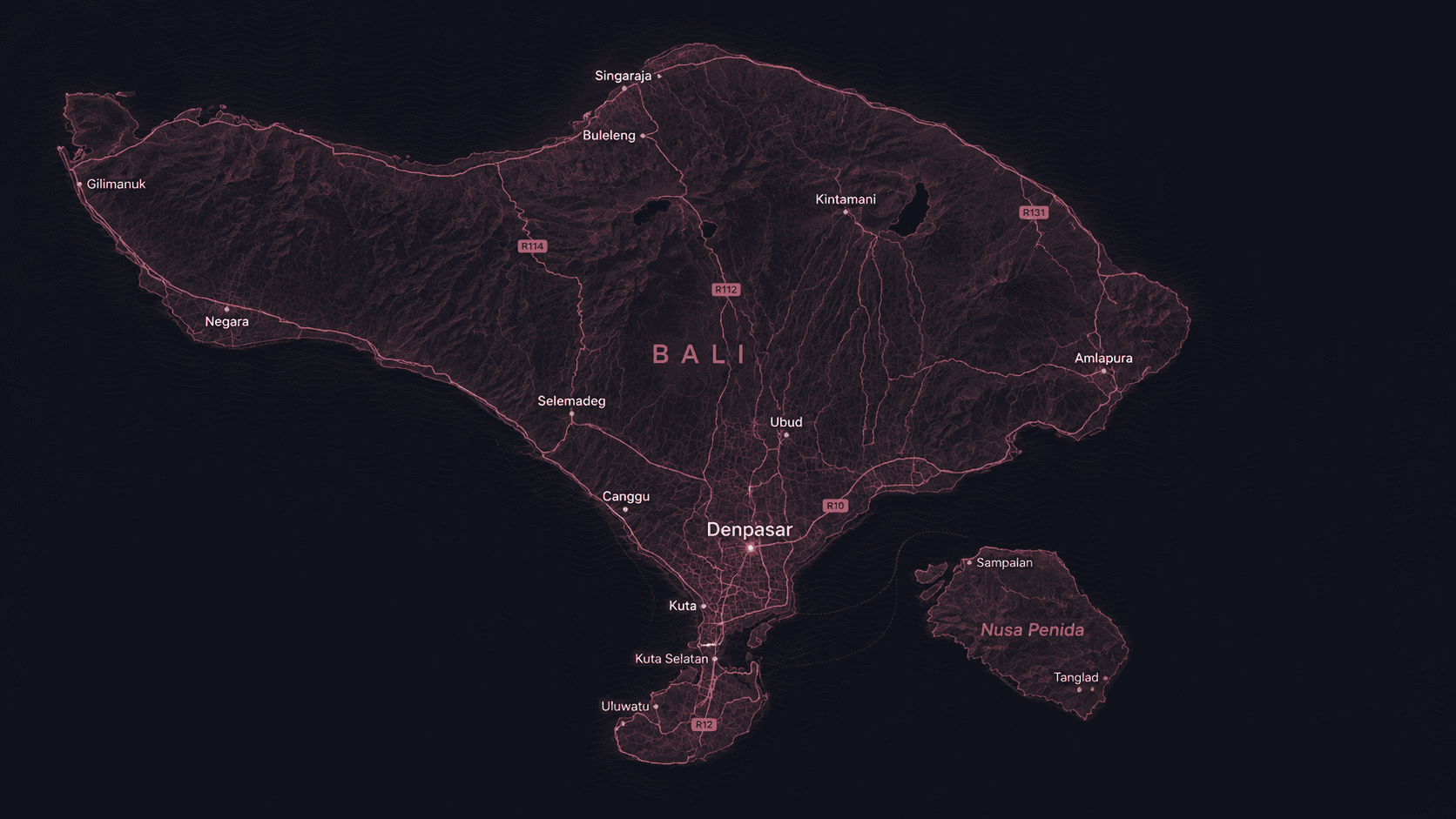

When you arrive in Bali for the first time, staying connected seems like one of the easiest things to sort out.
Buy a SIM card, connect to the internet and forget about it.
In practice, the right option depends on why you are here: for a week, for a couple of months, or because you are planning to stay long-term.
We currently use a local Telkomsel SIM card, but if this were only a short trip, I would not make getting a local SIM my first task after getting off the plane.
If you are coming for a few days or weeks
The easiest option is to set up an eSIM before your flight.
You install it at home, and after landing your phone connects to a local network.
That means you can already use the internet at the airport to:
- order Grab or Gojek;
- open Google Maps;
- message your accommodation host;
- contact your driver;
- check your booking;
- message family and friends.
And you do not need to look for a mobile store straight after the flight.
FROGI now has its own travel eSIM service: FROGI eSIM
You choose Indonesia, select the amount of data and validity period you need, pay for the package and receive a QR code by email.
The package itself will start being used once you connect to a network in your destination country. :::
Before buying, check whether your phone supports eSIM.
One quick way is to dial `#06#`. If you see an EID* among the device details, your phone supports eSIM.
It is best to check the latest packages, validity periods and prices directly on the FROGI eSIM website before your trip.
When a local SIM starts to make sense
If you are not coming for a short holiday but are planning to live in Bali for several weeks or months, a local number gradually becomes more useful.
You may need it for:
- registering in local apps;
- communicating with couriers and drivers;
- contacting your accommodation host;
- local services;
- calls within Indonesia.
For example, registering Gojek with a foreign number can sometimes be difficult, so after moving here we ended up getting a local SIM anyway.
Which operators can you use
In Bali, you will most often come across several major mobile brands.
• Telkomsel
We use Telkomsel.
In our experience, it is enough for everyday life on the island: internet, maps, apps, communication with drivers and other daily tasks work fine.
But coverage in Bali depends a lot on the exact location.
The island is large, with mountains, rice fields, dense development and remote areas, so even a good operator does not mean the signal will be equally strong everywhere.
• XL
Another option is XL, which also offers products specifically for foreign tourists, including physical SIM cards.
Foreigners will usually need a passport and device details for registration.
• Smartfren
Smartfren also continues to operate as a separate mobile brand.
Since 2025, XL and Smartfren have been part of the merged telecommunications company XLSMART, although both brands have remained.
I would not choose an operator based only on someone else’s coverage ranking.
If you are staying long-term, it is much more useful to ask your accommodation host or neighbours which operator actually works well around your villa.
In Bali, the difference between two nearby locations can sometimes matter more than the difference between operators in general.
Where to buy a local SIM
You can register a SIM card after arrival at one of the operator’s official stores or partner outlets.
Foreigners will usually need a passport for registration.
Some operators offer special tourist plans that can be arranged in advance or activated after arrival.
If your internet is already working through eSIM, I would not try to sort everything out at the airport.
You can check in, get familiar with the area and then arrange a local number somewhere convenient.
What about IMEI?
This is the part worth understanding if you are coming for a longer stay.
Indonesia has an IMEI registration system for phones, tablets and other mobile devices brought in from abroad.
But the phrase:
“After three months, your phone will definitely be blocked”
oversimplifies the rules.
There is a separate scenario for tourists.
If you are temporarily staying in Indonesia and continue using your foreign operator’s SIM card in roaming, separate IMEI registration with Indonesian customs is not required.
If a foreign tourist wants to use a local Indonesian SIM card, the device can be registered through the mobile operator for access to the local network for up to 90 days.
So if you are coming for a few weeks or a couple of months, you do not automatically need to run to the airport customs desk and pay tax on your phone.
If you are planning to stay longer
If you are moving to Indonesia long-term and want to continue using a local SIM in a phone brought from another country, the rules are different.
In that case, it makes sense to look into full IMEI registration through Indonesian customs, Bea Cukai.
IMEI registration itself does not have a separate registration fee, but depending on the value of the imported device, customs duties and taxes may apply.
So if you already know before the flight that you are going to live in Indonesia long-term, it is better to understand this in advance rather than after the tourist access period to the local network has ended.
This topic needs a separate article because it is important to explain:
- who actually needs registration;
- when it is better to do it;
- how to declare the device on arrival;
- which documents are required;
- how customs charges are calculated;
- what happens with devices above the customs allowance;
- what to do if you have already left the airport.
📱 IMEI Registration in Indonesia: How It Works — coming soon.
What I would choose for different scenarios
If you are coming to Bali for a holiday or a few weeks, I would start with eSIM.
It solves the main problem: internet already works after landing, and you do not need to deal with a local number immediately.
If you are staying for several months, you can use eSIM for internet at first and then get a local SIM after you settle in.
If you are planning to move and live in Indonesia long-term, it is worth looking separately into both a local number and the IMEI rules.
So there is no single SIM card that works for everyone.
The main question is really:
Do you simply need internet after the flight, or do you need a full local number for everyday life?
That is what I would base the choice on.
Read also
🚖 How to get a taxi from the airport in Bali
📄 Which documents you need to enter Bali
Officially, I'm an editor of city media around the world. But really, I'm just that traveling frog who chases adventures, connects people, and discovers new ways to make life a little more meaningful, exciting, and full of wonder every day