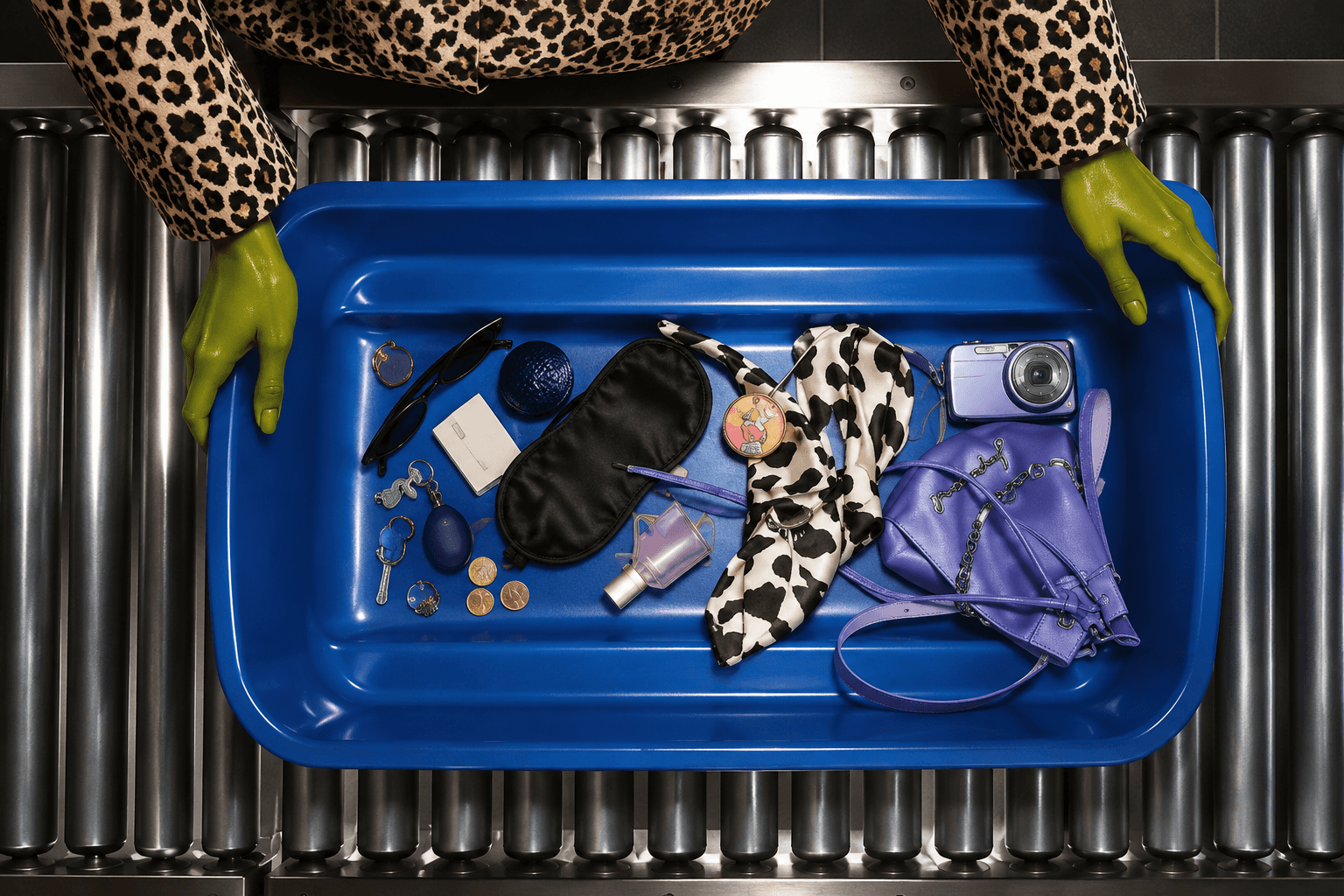
The packing list depends on one question:
Are you travelling to Vietnam for a couple of weeks, or are you planning to live here for several months?
Because those are two completely different suitcases.
If you are coming as a tourist, half the things that seem absolutely essential at home will probably spend the entire holiday untouched inside your luggage.
If you are moving, the important things are no longer the number of dresses and T-shirts, but documents, electronics and items that are difficult to replace quickly in another country.
So I would pack for two different scenarios.
✈️ If you are travelling to Vietnam for a holiday
My main rule is simple: do not bring half your wardrobe.
In Vietnam, you will spend most of your time in lightweight clothes. Especially if you are going to Nha Trang during the warmer season and are not planning to travel to cooler parts of the country.
I would actually try to leave some free space in the suitcase.
The reasons are pretty straightforward:
- You probably will not wear most of the things you bring anyway.
- You will almost always want to take home coffee, cosmetics, fruit or souvenirs.
- If you go shopping in Ho Chi Minh City, that empty space will suddenly become very useful.
👕 What clothes to bring
For a regular trip to Nha Trang, I would pack a simple lightweight wardrobe:
- T-shirts and tops;
- shorts;
- lightweight trousers;
- dresses;
- swimsuits;
- a shirt or light cover-up for the sun;
- one light sweater or cardigan.
The last one is useful for more than just the weather.
Air conditioning in Vietnam sometimes works as if someone decided to open a branch of the Arctic inside the café.
If you are planning a trip to Da Lat or mountainous regions, warmer clothes become much more important. Temperatures there can be very different from Nha Trang, especially in the evening and at night.
👟 Shoes
Do not try to bring shoes for every possible occasion.
Usually, these are enough:
- comfortable sandals or flip-flops;
- trainers;
- beach shoes.
If you are planning hiking, long walks or trips into the mountains, then choose footwear for that specific route.
Shoes that perfectly match one dress and one restaurant? I would leave those at home.
Although everyone knows their own level of optimism when it comes to holiday outfits.
🧴 Cosmetics and personal care
I would not bring large bottles of shampoo, shower gel or other basic products. All of this is easy to buy in Vietnam.
There is plenty of:
- Korean cosmetics;
- Japanese brands;
- local products;
- international brands;
- pharmacy skincare.
For online shopping, Shopee, Lazada and Hasaki are useful.
We covered apps in more detail in a separate article: “Which Apps to Install Before Travelling to Vietnam”.
But if you have a specific cream, skincare product or medication that is difficult to replace, it is better to bring it with you.
💊 Medication
Basic over-the-counter medicines can be bought in Vietnam.
But if you regularly take specific medication, I would not rely on the idea of:
“I’ll just find an alternative when I get there.”
The brand name may be different, the dosage you need may not be available, and some medicines may be sold under different rules.
So medication for regular treatment is better brought with enough supply for the trip.
Keep it in the original packaging.
If the medication is prescription-only or specific, check Vietnam’s import rules in advance and bring supporting documents if necessary.
☀️ Things almost everyone will need
There are a few things I would either put in my carry-on or buy immediately after arrival:
- sunscreen;
- sunglasses;
- a hat or cap;
- mosquito repellent;
- a reusable water bottle;
- a small power bank;
- a universal cable or charger;
- a swimsuit (in case your luggage gets lost) — honestly, no need to waste time, the holiday is not endless;
- copies of your documents saved on your phone.
I would especially not try to save money on sun protection.
In Vietnam, it is very easy to spend your first day thinking:
“I’m not even sunburnt.”
And then spend the evening going through all five stages of acceptance.
📱 Sort out your connection in advance
You will need internet almost immediately after landing.
Open a map. Call Grab or Green SM. Message your accommodation host. Contact your driver.
If your phone supports eSIM, you can install it before the trip.
FROGI has its own service, FROGI eSIM, where you can choose a package for Vietnam and prepare your internet connection in advance.
We explain physical SIM cards, eSIM and local operators in more detail in the article “SIM Cards and Internet in Vietnam”.
👜 What I would keep in my carry-on
Your suitcase may be delayed.
You may also end up with a long layover.
So in my carry-on, I would keep:
- passport;
- cash and bank cards;
- phone;
- charger;
- power bank;
- essential medication;
- a minimal hygiene kit;
- a change of underwear;
- one lightweight T-shirt;
- accommodation and travel documents.
And I would save everything important offline as well.
Not just in your email.
Because trying to remember your Gmail password at the airport without internet stops being funny very quickly.
🏡 If you are moving to Vietnam
Here, the logic changes.
When moving, I would think first not about clothes, but about the things that are difficult to replace remotely.
Documents
Which documents you need depends on the purpose of your move.
Work. Study. Business. Family. Long-term residence.
These are completely different scenarios.
So I would check the requirements for your specific situation on official resources and prepare the documents before departure.
Depending on your plans, you may need:
- international passport;
- domestic identification documents from your country;
- birth certificate;
- marriage certificate;
- education documents;
- criminal record certificate;
- documents confirming a change of first or last name;
- medical documents;
- proof of qualifications.
But this is not a universal mandatory list for everyone moving to Vietnam.
First, you need to understand exactly why you might need a particular document.
Before moving, check separately:
- whether you need the original document;
- whether a translation is required;
- whether legalisation or another form of authentication is required;
- how long a certificate remains valid;
- whether the document can be obtained remotely.
These things are much easier to sort out at home than after the document suddenly becomes necessary in Vietnam.
📄 Power of attorney and matters back home
If you are leaving behind:
- property;
- a car;
- banking matters;
- documents;
- a business;
- other obligations,
think in advance about whether someone will be able to handle an urgent issue without you being physically present.
In some situations, you may need a power of attorney.
But its wording and scope depend on exactly what actions the person will need to perform.
So I would not download the first template I found online. I would check the requirements for my specific situation in advance.
💻 Electronics
When moving, I would pay particular attention to electronics.
Phone, laptop, chargers, external drives, work equipment.
Anything you genuinely cannot work or live without during the first few weeks.
But I would not bring half the household appliances with me.
You can buy almost everything in Vietnam.
Before moving, it is more useful to check:
- whether the model you need is sold locally;
- how much the price differs;
- whether the warranty works;
- which plugs and chargers are used;
- whether servicing is available.
Sometimes it is easier to sell an item at home and buy a new one after moving.
👗 Do not move your entire wardrobe
Almost every move starts with the thought:
“I will definitely need this.”
And a few months later, some of those things are still sitting in a box.
For most of the year in Vietnam, you will mostly wear lightweight clothes.
I would still bring a few things for cooler weather, especially if you are planning to travel around the country.
But I definitely would not move an entire winter collection just in case inspiration suddenly strikes.
💧 Humidity and your belongings
This is something you really should be prepared for, especially if you are staying long-term.
Vietnam has high humidity.
It can affect:
- clothes;
- shoes;
- bags;
- wardrobes;
- documents;
- electronics;
- metal fittings.
If things are not used for a long time and are stored in a closed, humid space, they can develop a smell or mould.
So after moving, I would fairly quickly buy:
- moisture-absorbing bags;
- wardrobe moisture-control products;
- a dehumidifier if necessary.
And I would regularly air out my belongings.
Especially during the rainy season.
🧳 What you definitely do not need to bring in huge quantities
I would not stock up for six months on:
- shampoo;
- shower gel;
- household cleaning products;
- towels;
- dishes;
- regular cosmetics;
- basic clothing.
All of this can be bought in Vietnam.
The longer you live in another country, the faster you realise:
the most valuable thing about your luggage is not how much it can hold, but how easily you can move on with it.
Especially if Vietnam is not the final country on your route.
✅ What to check before closing your suitcase
If you are travelling as a tourist:
- Passport and documents.
- Cards and money.
- Insurance.
- Medication.
- Internet connection after arrival.
- Lightweight clothing.
- Clothes for any additional regions on your route.
- Chargers and electronics.
- Free space in your suitcase.
If you are moving:
- All documents required for your specific situation.
- The ability to handle matters back home remotely.
- Medication and medical documents.
- Work equipment.
- Important original documents.
- Backup copies of documents.
- Only the clothes you will actually use.
You can buy almost everything in Vietnam.
So I would bring fewer things and pay more attention to what is genuinely difficult to replace: documents, medication, electronics and access to your money.
Everything else can usually be sorted out once you are there.
And those extra kilos of free luggage allowance will thank you on the way home.
FAQ
Officially, I'm an editor of city media around the world. But really, I'm just that traveling frog who chases adventures, connects people, and discovers new ways to make life a little more meaningful, exciting, and full of wonder every day