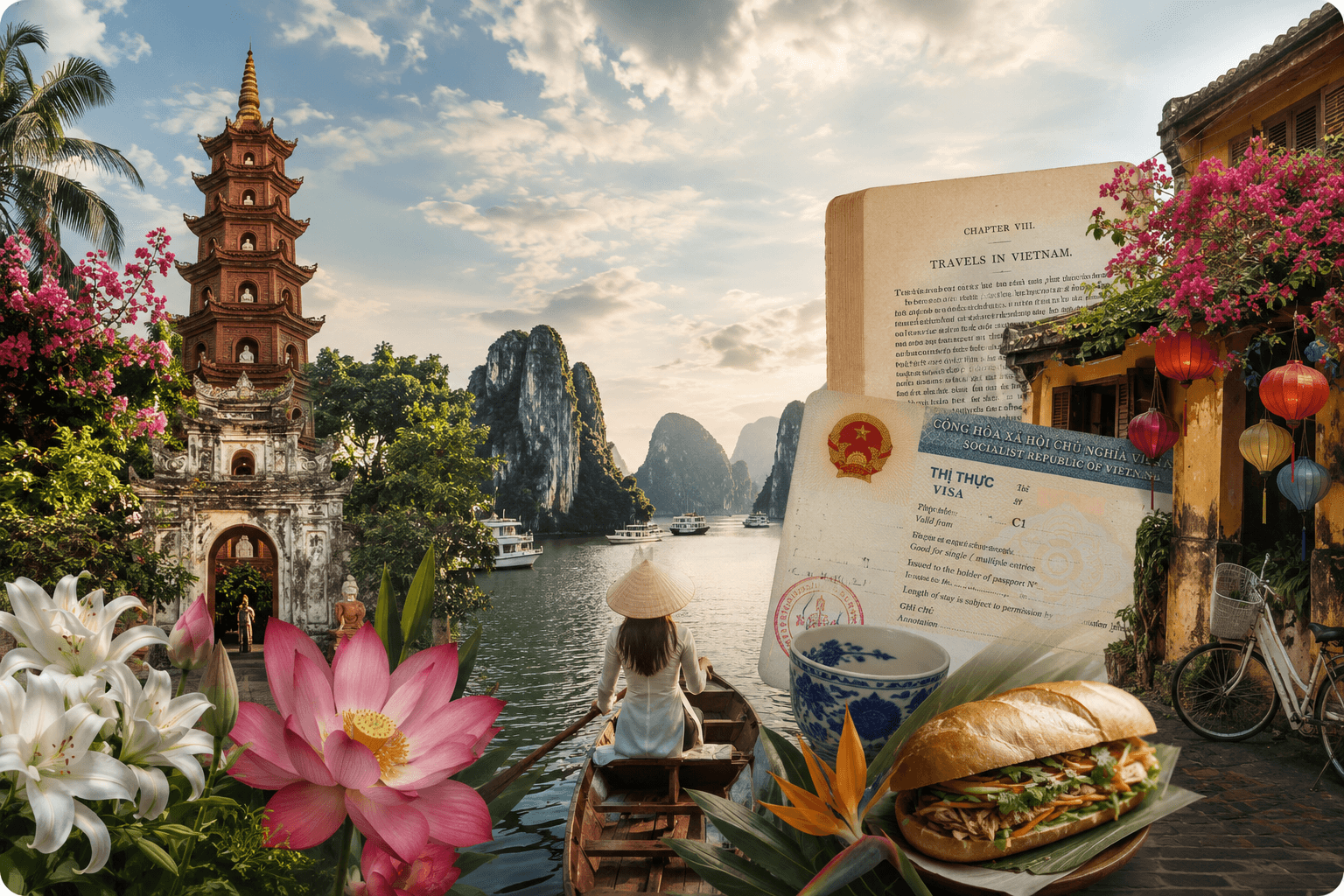
Visa rules are one of those things that are better checked before buying your tickets, not the evening before your flight. Especially if you are planning to stay in Vietnam for more than two weeks — a month or longer, for example.
For Russian citizens, things are currently quite simple. If you have a regular Russian international passport and your trip fits within the visa-free stay period, you do not need to arrange a visa in advance.
But there are still a few details I would check before travelling.
🇻🇳 Do Russians need a visa for Vietnam?
Russian citizens can stay in Vietnam visa-free for up to 45 days.
This policy is currently in place until March 14, 2028.
For visa-free entry, your passport must be valid for at least 6 months from the date you enter Vietnam.
Visa rules can change.
Before buying tickets or planning a longer stay, make sure to check the latest requirements on the official website of the Ministry of Foreign Affairs of Vietnam:
✈️ If you are staying for less than 45 days
For a regular tourist trip, a Russian citizen does not need a visa.
This works, for example, if you are:
- going on holiday;
- coming to Nha Trang for a few weeks;
- travelling around Vietnam;
- planning to spend a month here and then continue your trip elsewhere.
I would still check your passport validity and the latest entry requirements before departure. Five minutes spent checking can genuinely save a lot of stress.
🗓 If you want to stay for more than 45 days
Then you need to think in advance about the legal basis for staying in Vietnam longer.
For travellers, one option is the electronic eVisa. Vietnam’s official eVisa can be issued for up to 90 days.
There are two options:
- single entry — one entry;
- multiple entry — several entries during the visa validity period.
Applications must be submitted through the official government portal:
There are many intermediaries and websites online that look almost identical to official government pages. Vietnam’s official eVisa portal is:
https://evisa.gov.vn
🔁 Single or Multiple
This depends entirely on your plans.
Single entry
Suitable if you enter Vietnam once and plan to stay in the country until the end of your trip.
For example: Russia → Vietnam → Russia
Multiple entry
Needed if you plan to leave Vietnam and return during the validity period of your visa.
For example: Vietnam → Thailand → Vietnam
or
Vietnam → Bali → Vietnam
So before applying, I would first look at your entire route and only then choose the visa type.
👀 If you have a passport from another country
Do not automatically follow the rules for Russian citizens. Vietnam has different agreements with different countries.
For example, visa-free conditions vary even among CIS countries.
Citizens of Belarus, Kazakhstan and Kyrgyzstan have their own visa-free entry conditions.
For other nationalities, an eVisa or another type of visa may be required.
So this is not a case where I would rely on a table from Telegram, a forum or an old article.
Open Vietnam’s official list and find your specific country:
Official list of visa exemptions
If you are still unsure, check the information with a Vietnamese embassy or consulate as well.
😅 A mistake I made once
When my first 45 days in Vietnam were coming to an end, I decided to apply for an eVisa in advance.
I opened ChatGPT. We filled out the application together. I calmly flew to Bangkok and started waiting for the result. A few days later, an email arrived.
❌ Rejected. womp womp...
And that is when I discovered one important detail. I had submitted the application while I was still in Vietnam.
The official eVisa portal is intended for foreigners applying while they are outside Vietnam.
In the end, I lost time simply because I had not opened the official source before applying. ChatGPT could apologise as much as it wanted afterwards.
The border officers could not care less.
Since then, I have one rule for visa questions: official website first, everything else second.
📄 What to check before applying for an eVisa
Before submitting the application, carefully check:
- passport details;
- spelling of your first and last name;
- passport number;
- travel dates;
- planned entry date;
- selected visa type;
- port of entry into Vietnam;
- passport validity.
With visa documents, one wrong digit can matter much more than a beautiful application photo.
So this is not the place to rush.
💼 What if you plan to work or do business?
Tourist entry and the right to work in Vietnam are two different things.
If you are planning to:
- work officially;
- open a company;
- run a business;
- arrange long-term residence;
- work under a local employment contract;
do not assume:
“I am allowed to stay in the country, so I am allowed to work here.”
Work, business and long-term residence are governed by separate immigration and labour rules.
In that case, I would check the requirements for your specific situation through official authorities or a qualified specialist.
📱 What else to sort out before arrival
After the visa question, I would immediately deal with the second one: internet.
You will probably need it at the airport to open a map, contact your accommodation host or call a car.
If your phone supports eSIM, you can install one before the trip.
We created our own service for this: FROGI eSIM.
And we explained local SIM cards, mobile operators and the difference between a physical SIM and eSIM in detail in the article “SIM Cards and Internet in Vietnam”.
✅ What to check before departure
I would go through this list a few days before the trip:
- How many days you are planning to spend in Vietnam.
- Whether your nationality requires a visa.
- Whether your passport has enough validity left.
- Whether you need an eVisa.
- Whether all the details on the visa are correct.
- Which port of entry you are using.
- Whether your documents are saved offline.
- Whether you will have internet after arrival.
That covers the basic visa question.
Then you can move on to the more enjoyable part of planning.
For example, deciding where you want to stay in Nha Trang and how many swimsuits you actually need to pack.
- if you have a Russian passport and your trip to Vietnam is no longer than 45 days, you can currently enter visa-free as long as you meet the entry requirements.
- if you want to stay longer, check the suitable option on the official eVisa portal.
- regardless of nationality, always recheck the current rules with an official source before every trip.
*Visa rules change faster than old articles disappear from Google.
Important: this material is for informational purposes and is current as of August 2026. Visa and immigration rules may change. Always check the latest requirements on official Vietnamese government resources before travelling.
FAQ
Officially, I'm an editor of city media around the world. But really, I'm just that traveling frog who chases adventures, connects people, and discovers new ways to make life a little more meaningful, exciting, and full of wonder every day