Written by: Vladislav @Zinch_V
When we were planning our trip to Kruger National Park, we decided not to buy a ready-made safari tour and instead try to organise everything ourselves.
In the end, over three days we managed to stay right inside Kruger, spend every night at a different campsite, drive around the park without a guide and see almost the entire African Big Five.
The whole trip cost us around $1,130 for two people.
Here is how we organised everything and where that money went.
All prices in this article are from our own trip and may change. I am sharing our personal experience and what we paid at the time.
✈️ From Cape Town to Mpumalanga
The first thing we needed was flights.
We found an option through Trip.com and bought return tickets Cape Town — Mpumalanga — Cape Town for around $470 for two people.
That got us quickly from the Cape to the region where we could start our journey into Kruger.
🚙 Instead of a hotel, we rented a camper
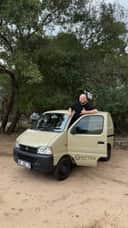
After landing, we rented a small fully equipped camper from Kitted Africa.
The vehicle cost around $250 for three days, plus a refundable deposit of R5,000.
The car became one of the main parts of the whole idea.
We did not need to look for separate accommodation every night because the camper was already set up for life on the road.
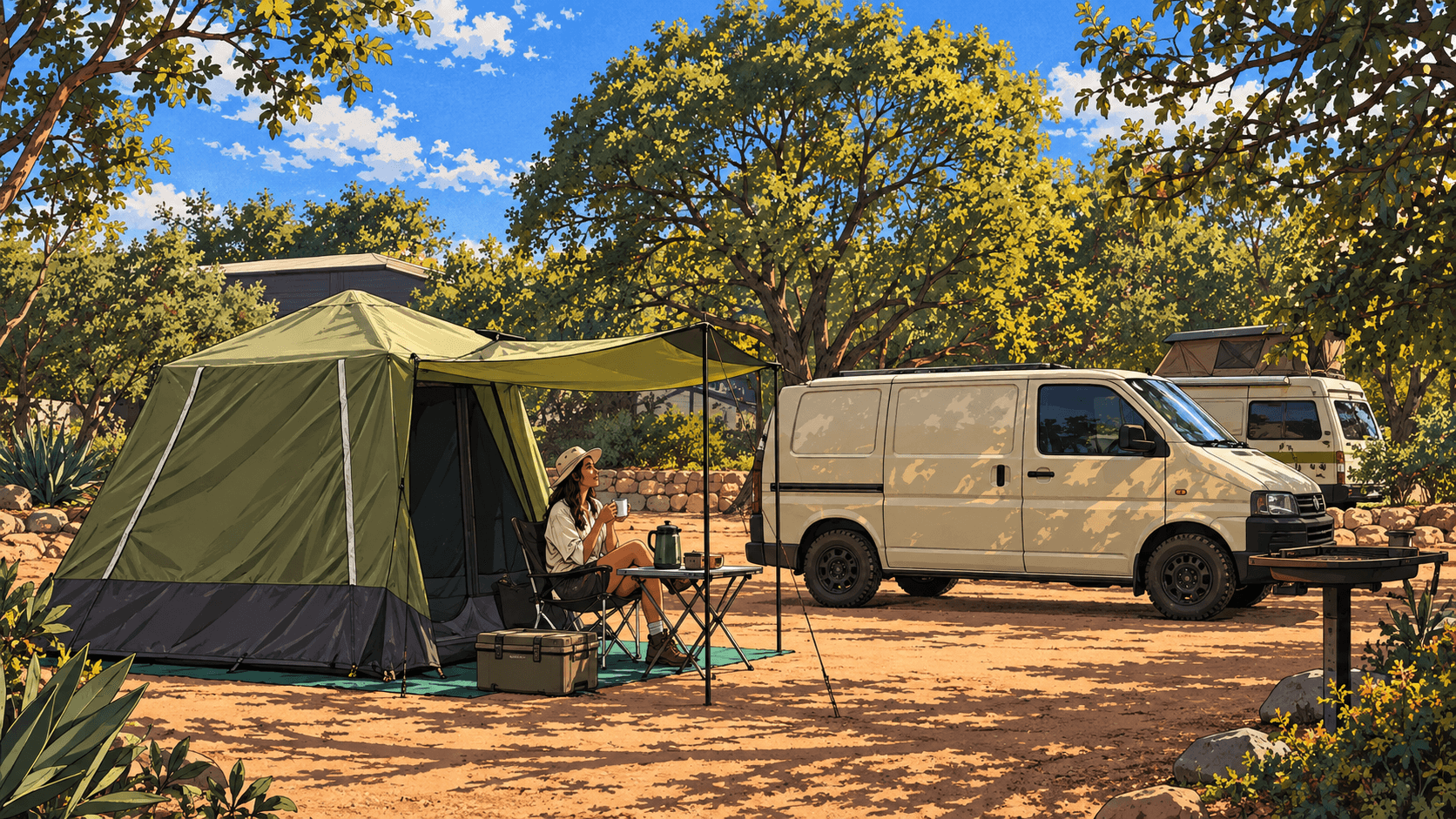
Inside, there was everything we needed: a rooftop tent, sun awning, bedding, cookware, a gas stove, fridge and an extension cable for connecting to electricity.
There was even a Polaroid camera with ten shots, which turned out to be a very sweet little detail of the trip.
And the car itself constantly attracted attention.
People would come over and ask what kind of miracle vehicle it was.
🏕 We slept right inside Kruger
Instead of lodges, we chose campsites inside the national park.
Entry to Kruger plus our campsite cost around R1,500 per day.
Over three days, that came to about R4,500 for two people, or roughly $260 at the time of our trip.
Every night, we stayed at a different camp and chose an available spot there for the car and tent.
Before the trip, I imagined camping inside a national park to be much more rugged.
In reality, the facilities pleasantly surprised us.
The camps had proper showers and toilets, water, electricity and braai areas.
At the campsite, we could connect to a power point using the extension cable from the car, and in the evening calmly cook dinner over an open fire.
Even in the middle of the wilderness, we did not have to give up all the comforts we were used to.
🍽 Food was easier than we expected
We brought some food with us because we assumed the choice inside the park would be limited or everything would be much more expensive.
But Kruger has shops and cafés, and from our experience, the prices were completely reasonable.
Over three days, we spent around $120 for two people on groceries and café meals, so roughly $40 a day.
One place we especially remembered was Tshokwane Trading Post.
We really enjoyed the food there, and at the time of our trip, the prices felt almost half of what we were used to paying in Cape Town cafés.
So there is absolutely no need to cook for yourself every evening.
We mixed it up: sometimes we ate at cafés, sometimes bought groceries and cooked ourselves.
One evening, we even cooked antelope meat on the braai that we had bought at a local shop.
For this particular trip, that dinner felt very appropriate.
🐘 Three days living by Kruger’s rhythm
Gradually, our normal daily routine completely changed.
We woke up with the sunrise, immediately went looking for animals, spent most of the day on the road and returned to camp after dark.
In the evening, we made a fire, cooked dinner and went to sleep pretty quickly.
Then in the morning, it all started again.
And I really liked that rhythm.
After a couple of days, you stop living according to your usual city schedule and start adjusting to daylight and the park itself.
🦁 What we saw without a guide
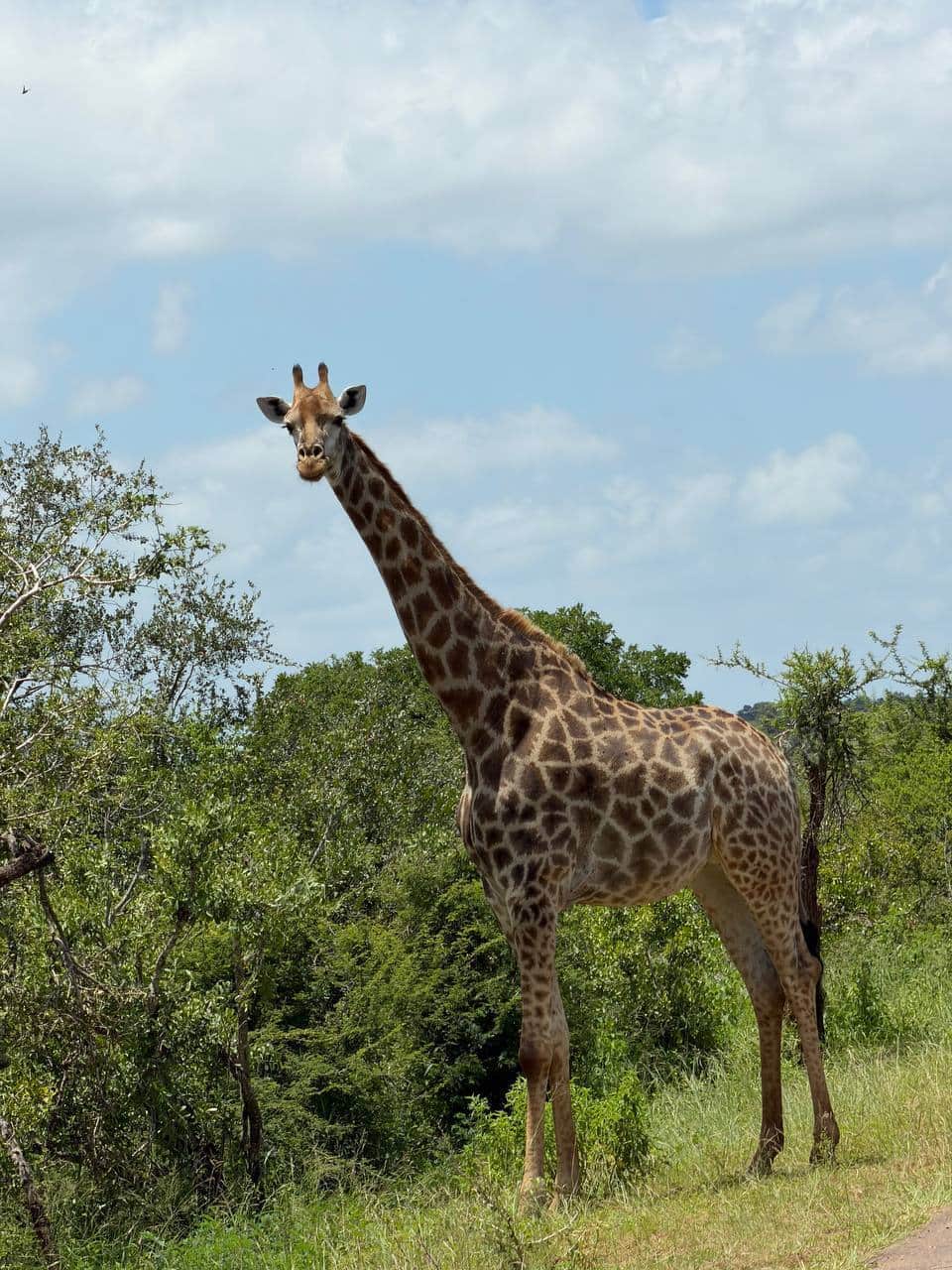
The most interesting part was that we did the entire safari independently, in our own car and without a guide.
We simply drove along Kruger’s roads and looked around.
Over three days, we managed to see elephants, buffalo, lots of antelope, giraffes, hippos and a leopard.
We also saw several lions.
At one point, they were literally two or three metres from our car.
Of the animals we especially wanted to see, only cheetahs and rhinos did not appear.
But that was also one of the biggest advantages of travelling independently.
No one told us where to go next or how long we were allowed to stay in one place.
We could choose our own roads, stop wherever we wanted and watch the animals for as long as the situation allowed.
💰 How much three days of safari cost
In the end, our expenses for two people looked like this:
- return flights Cape Town — Mpumalanga — Cape Town — around $470;
- fully equipped camper rental for three days — $250;
- refundable vehicle deposit — R5,000;
- Kruger entry and campsites for three days — around R4,500 / $260;
- groceries and cafés — around $120;
- petrol — around $30.
Total: approximately $1,130 for two people for the entire trip.
Before travelling, we also looked at organised three-day safaris with a guide and accommodation.
The options we found at the time cost more than $1,700.
In our case, travelling independently turned out to be cheaper.
But saving money was not the only reason we liked it.
Was it worth it?
Absolutely.
We chose our own route, stayed right inside the national park, changed camps every night, woke up with the sunrise and were not tied to a group schedule.
At the same time, the trip never felt like some extreme expedition where you have to survive three days without a shower and cook canned food over a fire.
The camper was well equipped, the camps had proper infrastructure, and inside the park we could buy groceries and eat at cafés.
It turned into a very independent, sometimes slightly wild, but still genuinely comfortable way to travel.
And seeing lions just a few metres from the car, then setting up camp ourselves and making a fire in the middle of Kruger that evening, definitely became one of those experiences we will remember for a very long time.