In Cape Town, you can find the perfect apartment, book it, arrive — and a day later realise that the problem was never the apartment.
You simply chose the wrong area for your trip.
Where you stay here really changes the whole experience.
- You can step out to the ocean every morning.
- You can live surrounded by restaurants and city life.
- You can wake up in complete silence with a view of the water.
Or you can choose a beautiful house further from the centre and suddenly realise that without a car, every simple task turns into a trip.
So I would only open Booking or Airbnb after asking one question:
Which version of Cape Town do you want to experience?
🌊 Want the ocean, but still want normal city life?
Look at:
- 📍Sea Point
- 📍Green Point
- 📍Mouille Point
These are some of the easiest areas to understand for a first trip.
You have the ocean nearby, the promenade, cafés, supermarkets and restaurants. Uber is usually easy to get, and a lot of everyday things can be done without a car.
If you do not really understand Cape Town yet and want the most versatile option, this is where I would start looking.
🌅 Want a holiday that looks like the photos?
Then look at 📍Camps Bay.
Beach, palm trees, ocean, the Twelve Apostles and those sunsets.
But along with the view, you are also choosing a resort-style experience:
- more tourists;
- higher prices;
- more difficult parking during high season;
- less everyday city infrastructure.
📍Camps Bay is beautiful if that is exactly what you want.
But I would not choose it only because the photos look good.
🤍 Want privacy and quiet?
Look at 📍Clifton and 📍Bantry Bay.
Clifton especially is the kind of place where the accommodation itself can become part of the trip.
Ocean, views, gated complexes, quiet.
But for coffee, groceries and city life, you will usually need to drive somewhere.
☕ Want to feel the city?
Then these areas become more interesting:
- 📍Gardens
- 📍Tamboerskloof
- 📍De Waterkant
Cape Town feels completely different here.
Cafés, restaurants, residential streets, old houses, city life.
But in the central part of Cape Town, it is especially important to look not only at the neighbourhood, but at the exact street.
Sometimes just a few blocks really can change how a place feels.
🛍 Want to keep everything simple?
Then 📍V&A Waterfront.
Restaurants, shops, walking areas, tourist infrastructure, security and a constant flow of people.
For your first few days in the city, it is a very easy option.
But it is worth understanding that the Waterfront shows you a fairly polished, tourist version of Cape Town.
If you want to experience more of the actual city, I would look at other areas too.
🪁 Want more space and do not mind driving?
Then there is 📍Table View and the northern coastline.
Here you can get:
- more space for the same money;
- the ocean;
- a more open feel;
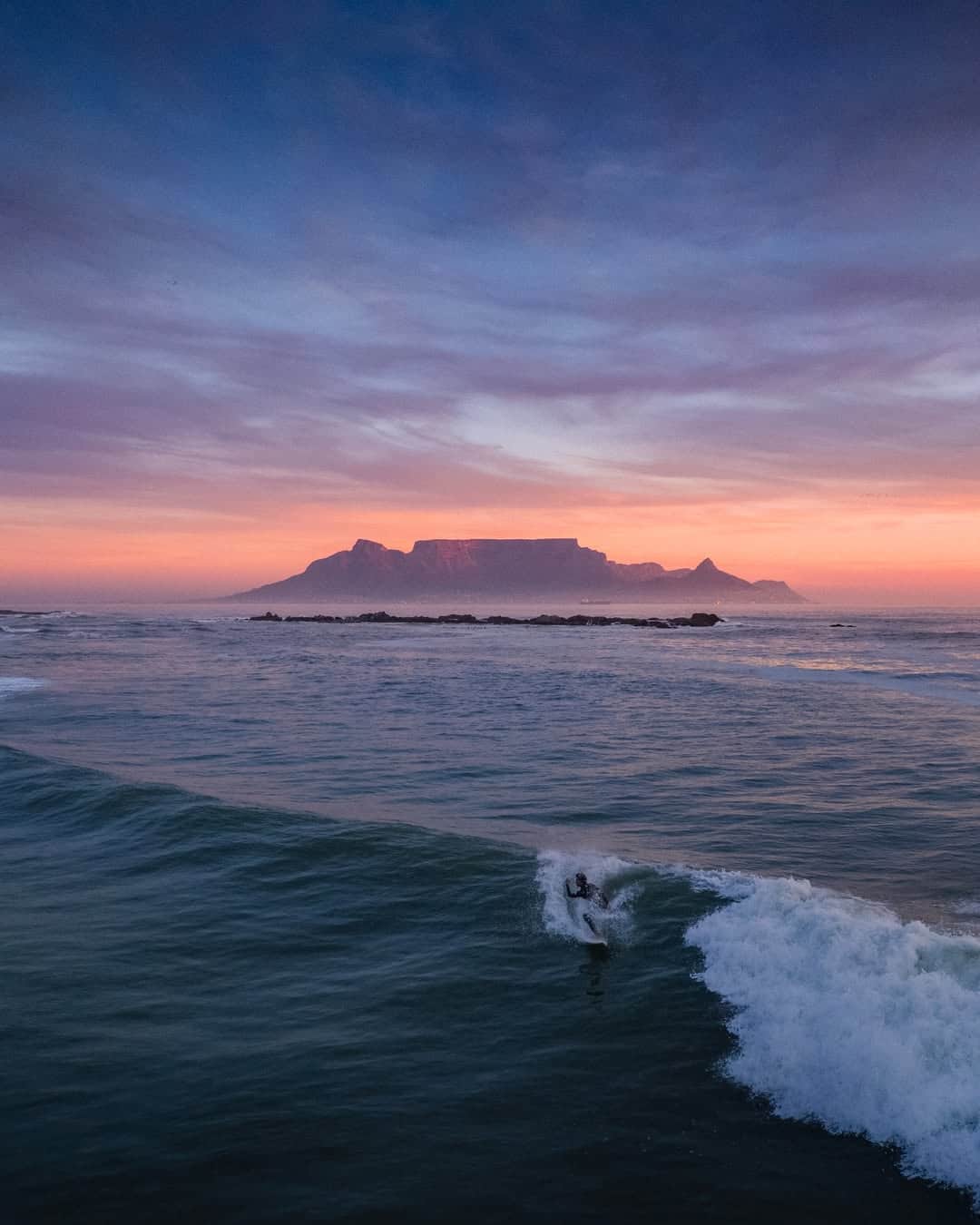
- the famous view of Table Mountain across the bay;
- great access to kitesurfing.
But for this kind of lifestyle, having a car becomes much more useful.
🚗 Do you have a car?
This question alone can completely change which areas make sense.
Without a car
I would first look at:
- 📍Sea Point;
- 📍Green Point;
- 📍Mouille Point;
- 📍Gardens;
- 📍De Waterkant;
- 📍V&A Waterfront.
Here it is easier to use Uber and handle some everyday things on foot.
With a car
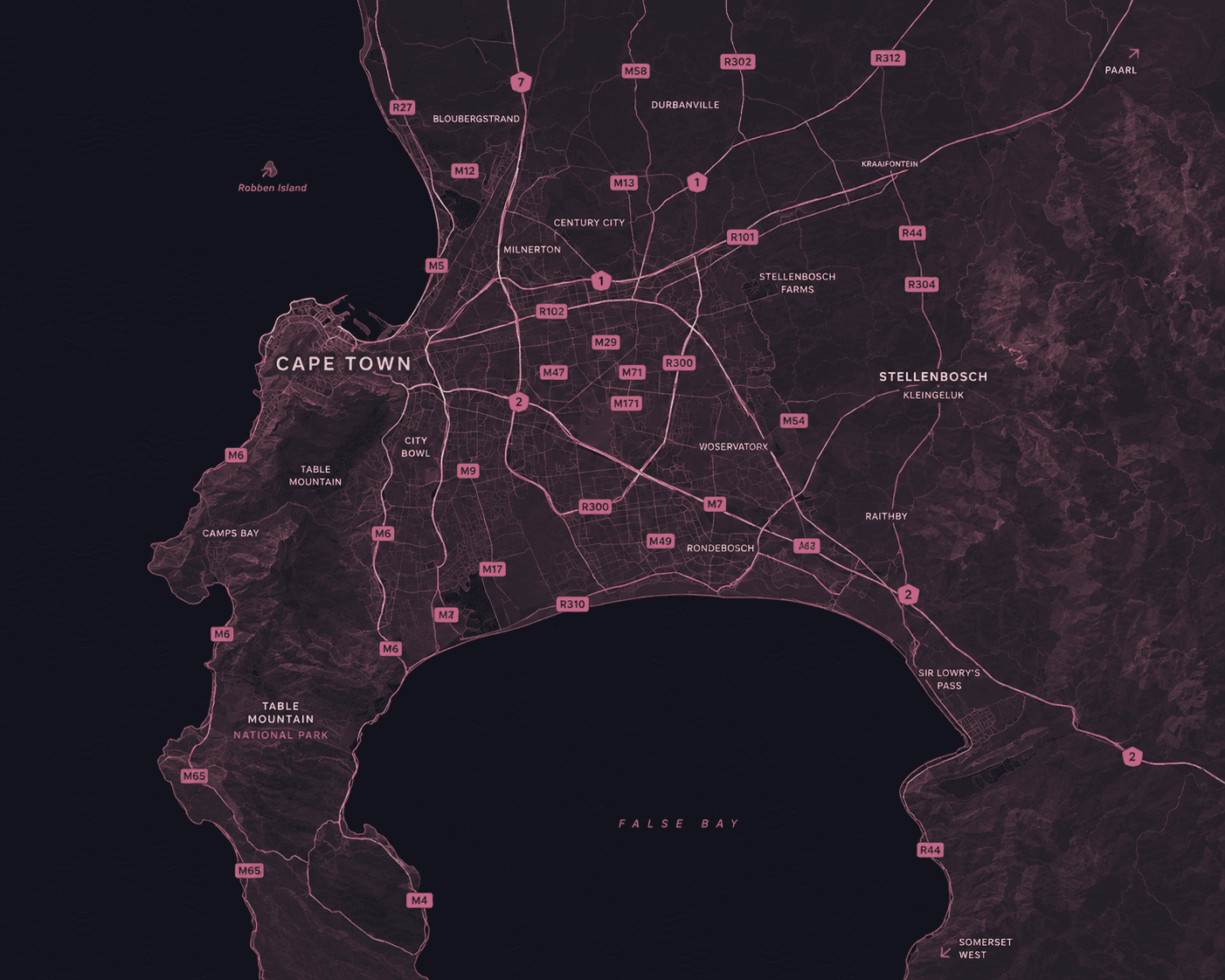
The map immediately gets much bigger.
You can start looking at:
- 📍Table View;
- 📍Blouberg;
- 📍Constantia;
- 📍Hout Bay;
- 📍Newlands;
- 📍Noordhoek;
- 📍Muizenberg;
- other areas further from the centre.
Distances in Cape Town are big.
And sometimes the problem is not whether you can get a taxi there.
The more interesting question is:
will it be just as easy to get back?
🗓 One week or several months?
These are also two completely different situations.
If you are coming for a one- or two-week holiday, I would not try to save a small percentage on accommodation if it means spending the whole trip travelling across the city.
For a short trip, location matters even more.
But if you are coming for a month or several months, you can look much wider:
- Vredehoek;
- Newlands;
- Claremont;
- Rondebosch;
- Constantia;
- Hout Bay;
- Blouberg;
- Muizenberg;
- Noordhoek;
- Fish Hoek;
- Century City and other areas.
Then work, sport, schools, a car, shops and your normal daily routine start to matter much more.
📍 What to check before booking accommodation
I would not look only at the photos.
Check:
- the exact street;
- what is around the building;
- how you will get back in the evening;
- whether Uber is easy to get;
- whether there is parking if you are renting a car;
- supermarkets and cafés nearby;
- reviews specifically about the location;
- security and access to the building;
- whether the area actually works for your daily route.
And only after that, look at how beautiful the bathtub in the apartment is.
There is no single neighbourhood that is best for everyone.
You can wake up in Camps Bay for the ocean. You can live in Gardens for the city. You can walk along Sea Point every morning. You can shut yourself away from the world in Clifton.
The only question is which Cape Town you want for yourself.
Officially, I'm an editor of city media around the world. But really, I'm just that traveling frog who chases adventures, connects people, and discovers new ways to make life a little more meaningful, exciting, and full of wonder every day