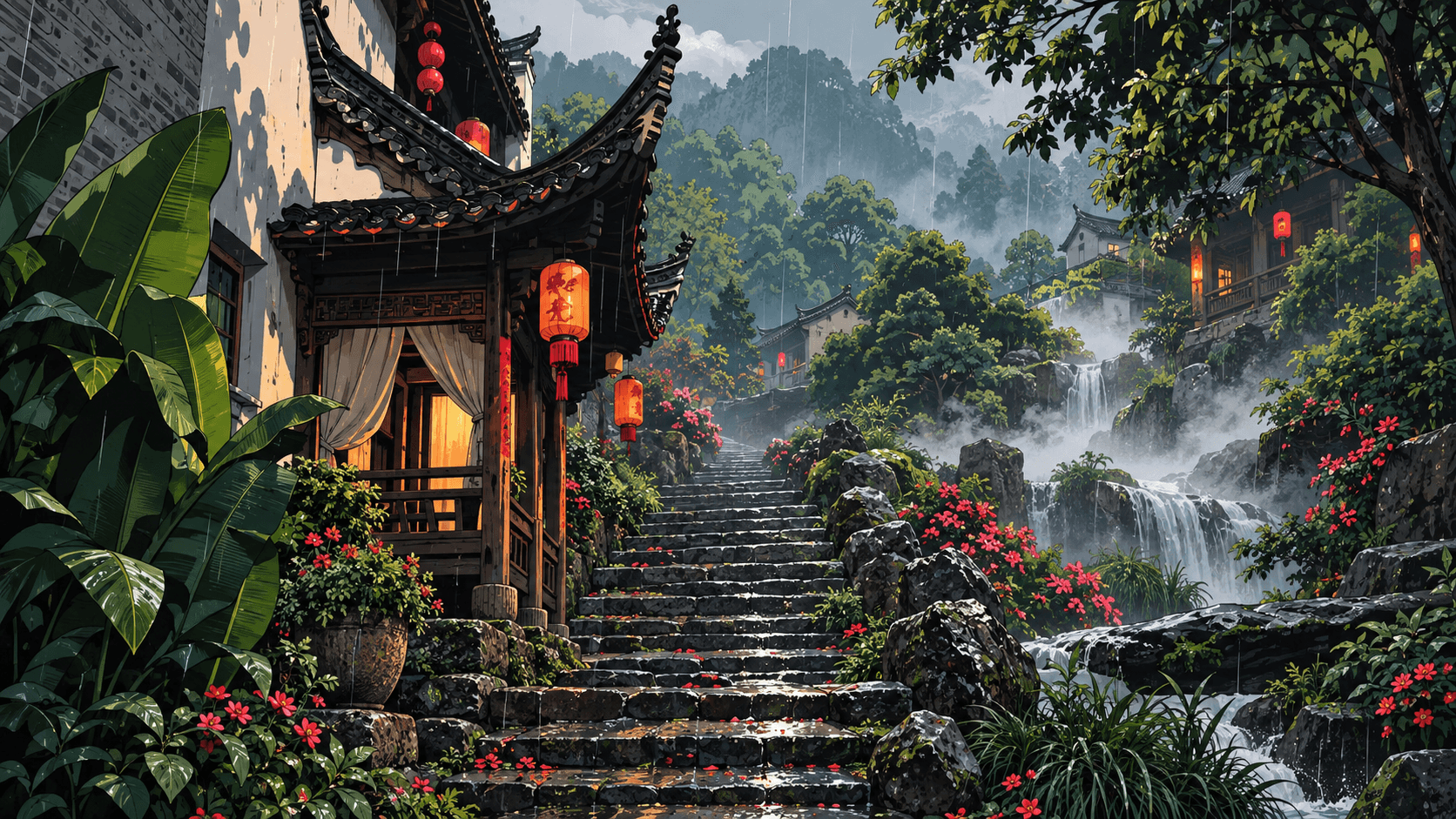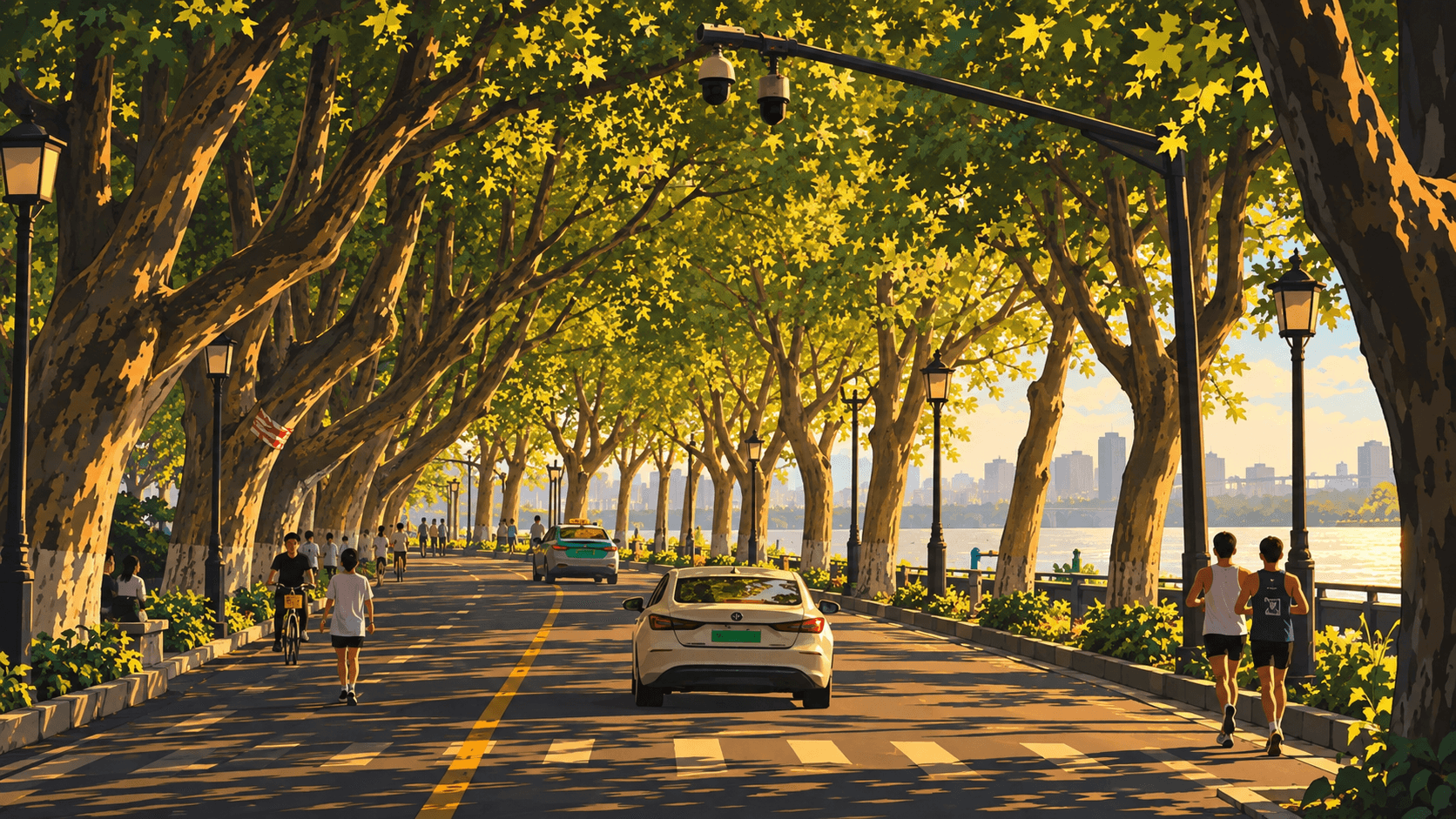
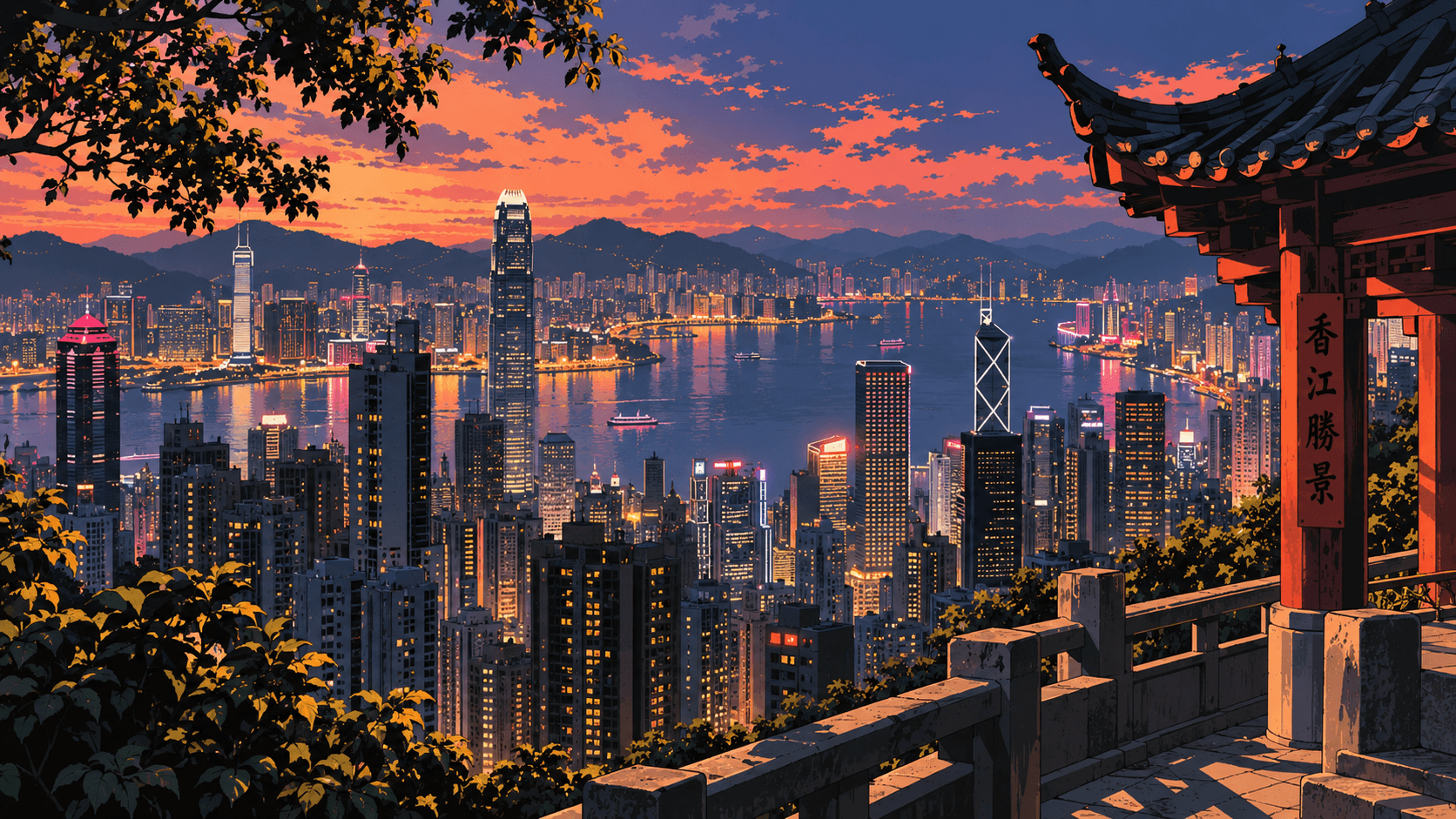
More precisely, you probably should not — if what you want from your first trip is an introduction to the history and culture of mainland China. Hong Kong is no less interesting and no “less Chinese”. It simply sets a completely different mood for a first trip.
When someone is choosing where to go in China for the first time, Hong Kong can seem like a fairly obvious option.
Skyscrapers between mountains and water, double-decker trams, ferries, dense urban development, international business and that unmistakable skyline you can recognise from a single photograph.
It feels like a place where you can begin discovering China a little more gently.
And in some ways, that is true.
But if what you want from the very first days is to immerse yourself specifically in the historical and cultural context of mainland China, Hong Kong will give you a completely different first chapter.
🏙️ First, it helps to understand what Hong Kong actually is
Today, Hong Kong is a Special Administrative Region of China.
After a long period of British administration, China resumed the exercise of sovereignty over Hong Kong on July 1, 1997.
At the same time, the Basic Law came into effect, establishing the principle of “one country, two systems” for the city.
And this is not simply a historical date worth knowing before a trip.
It explains a lot about why Hong Kong feels different.
The city retained its own legal and economic systems, uses the Hong Kong dollar, and has Chinese and English as its official languages.
At the same time, everyday life remains primarily Cantonese.
According to the 2021 census, 91.6% of the population was of Chinese ethnicity, while Cantonese was the usual spoken language for the overwhelming majority of residents.
So simply describing Hong Kong as an international city where different cultures have mixed together would also be too simplistic.
It is better understood as a Chinese city whose culture developed along its own historical path for more than a century.
Your first trip here will give you a very different impression of the country
Imagine you have never been to China and Hong Kong is the first place you arrive.
You will find yourself in a Chinese city, but also in an international megacity where Cantonese culture, the English language, Chinese traditions and the legacy of the British period exist side by side.
🌏 That combination is exactly what makes Hong Kong so interesting.
But if you then try to transfer your impressions of Hong Kong onto Beijing, Xi’an, Chengdu or Yunnan, the picture will start falling apart quite quickly.
Not because one of these versions is “real” and another is not.
China is simply far too large for one city to explain the whole country.
🏮 If you want to start with history, the route will look different
This is where my conversation with Lily, a woman from China whom FROGI met completely by chance, became especially useful.
When we were discussing a first trip around the country, she suggested starting with Beijing.
And among the cities that are especially interesting for understanding the historical side of China, she also mentioned Xi’an.
There is an understandable logic to that.
Beijing has been connected to the country’s imperial history for centuries, and even inside the modern megacity, an enormous historical layer remains part of the city.
Xi’an allows you to go even deeper into that history.
If the main interest of your first trip is how the China that exists today was formed, these cities offer a completely different way into the country.
Not a more correct one.
Just one that answers a different interest.
What if you want to see modern China?
History does not have to be the main reason for travelling at all.
If you are much more interested in how China’s enormous cities live today, the route changes again.
You can look towards Shanghai, Chengdu, Chongqing and other megacities.
Lily, for example, describes Shanghai as a very open city with its own character, while she sees Chengdu as one of the interesting places to continue a trip after Beijing.
🏙️ Here, discovering China becomes less about the old country and more about its present-day urban life, new neighbourhoods, transport, food, technology and completely different lifestyles.
And if you leave the big cities afterwards and head to Yunnan, the country will start looking different again.
Lily loves the region for its calmer, less urbanised way of life, as well as its cultural diversity and the presence of ethnic minorities whose lifestyles differ from those of Han Chinese communities.
At some point, the question “Where should I go in China?” stops being useful altogether.
It is much better to ask yourself:
Which China do I want to see first?
🌃 When Hong Kong can actually be an excellent beginning
If what attracts you is an international megacity, Cantonese culture, a complex history and a city where different historical influences still exist side by side, then the logic turns around completely.
Starting with Hong Kong makes perfect sense.
There is no mandatory “basic China” you have to complete first before earning the right to come here.
Hong Kong deserves a separate journey of its own.
And perhaps the contrast will make whatever comes next even more interesting.
First see Hong Kong, then arrive in Beijing or Chengdu and suddenly notice how much the language around you, the architecture, the rhythm and the overall atmosphere of the trip have changed.
❤️ I like this logic much more than trying to find one “correct” city for a first visit.
Hong Kong is not worse for discovering China. It simply sets a different mood
That is probably the main point. There is no need to divide cities into “real” and “not real” China. Hong Kong is real.
Beijing, Xi’an, Shanghai, Chengdu and Yunnan also tell their own stories within one enormous country.
But if you want your first trip to begin with imperial history, old urban layers and the cultural context of mainland China, I would not make Hong Kong your only introduction.
🏮 For that kind of journey, it makes more sense to start with Beijing or add Xi’an.
🌃 And choose Hong Kong for a different feeling: an international megacity, Cantonese culture and a city whose own history perfectly shows why China cannot be reduced to a single image.
Officially, I'm an editor of city media around the world. But really, I'm just that traveling frog who chases adventures, connects people, and discovers new ways to make life a little more meaningful, exciting, and full of wonder every day