Fish Hoek
A False Bay family resort that grew from farmland and a fishing coast.
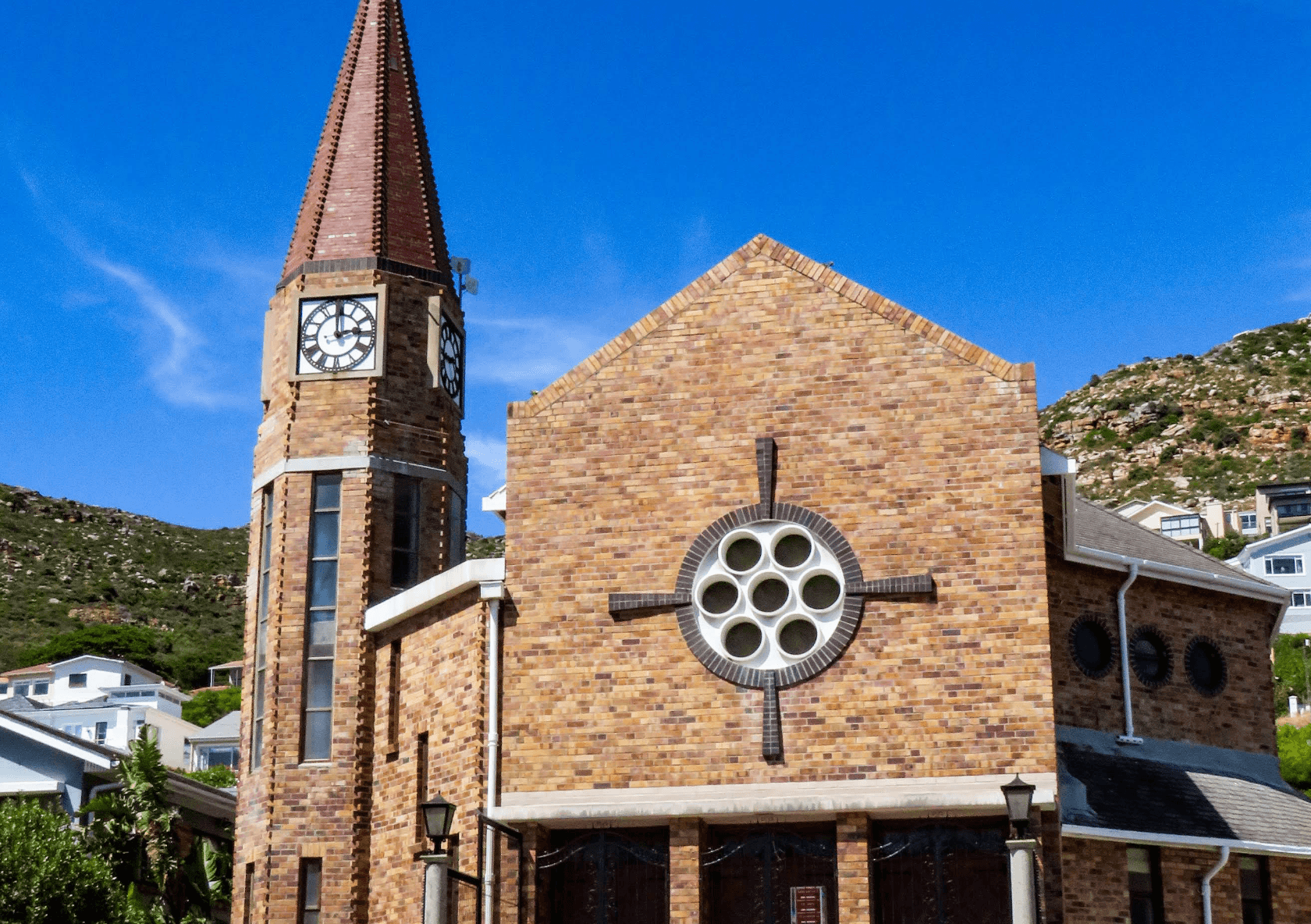
Fish Hoek appeared on early maps of the Cape long before it became a residential suburb.
Fishing and whaling were already part of the area during the 19th century, but the modern neighbourhood is closely connected with Hester de Kock.
She began welcoming some of the first holidaymakers onto her farm and later instructed that the land should be divided into plots after her death. Sales began in 1918, and Fish Hoek gradually developed into one of False Bay’s early family seaside suburbs.
The beach helps explain why people chose this side of the peninsula.
It is more sheltered, with water generally warmer than the Atlantic Seaboard. Jager Walk follows the rocks beside the coast, connecting the main beach with smaller coves and tidal pools.
So Fish Hoek is more than another beach between Muizenberg and Simon’s Town. The neighbourhood grew from Cape Town’s long habit of coming to False Bay for family time by the sea.
In short: 🎣 Fishing history · 🕰️ Plots sold from 1918 · 👩 Hester de Kock story · 🌊 Sheltered beach · 🚶 Jager Walk · 🪨 Tidal pools
🏡 For your stay: Fish Hoek suits visitors looking for a beach and a quieter pace by False Bay. Check the exact address, distances and your return plans before booking.
🚗 Getting around: plan your journeys in advance and compare the transport options for your route.
Services nearby



More verified places, new finds and round-ups go out in our Telegram channel.
Open Telegram