Bo-Kaap
The colourful houses are only the surface. Bo-Kaap’s real story runs much deeper.
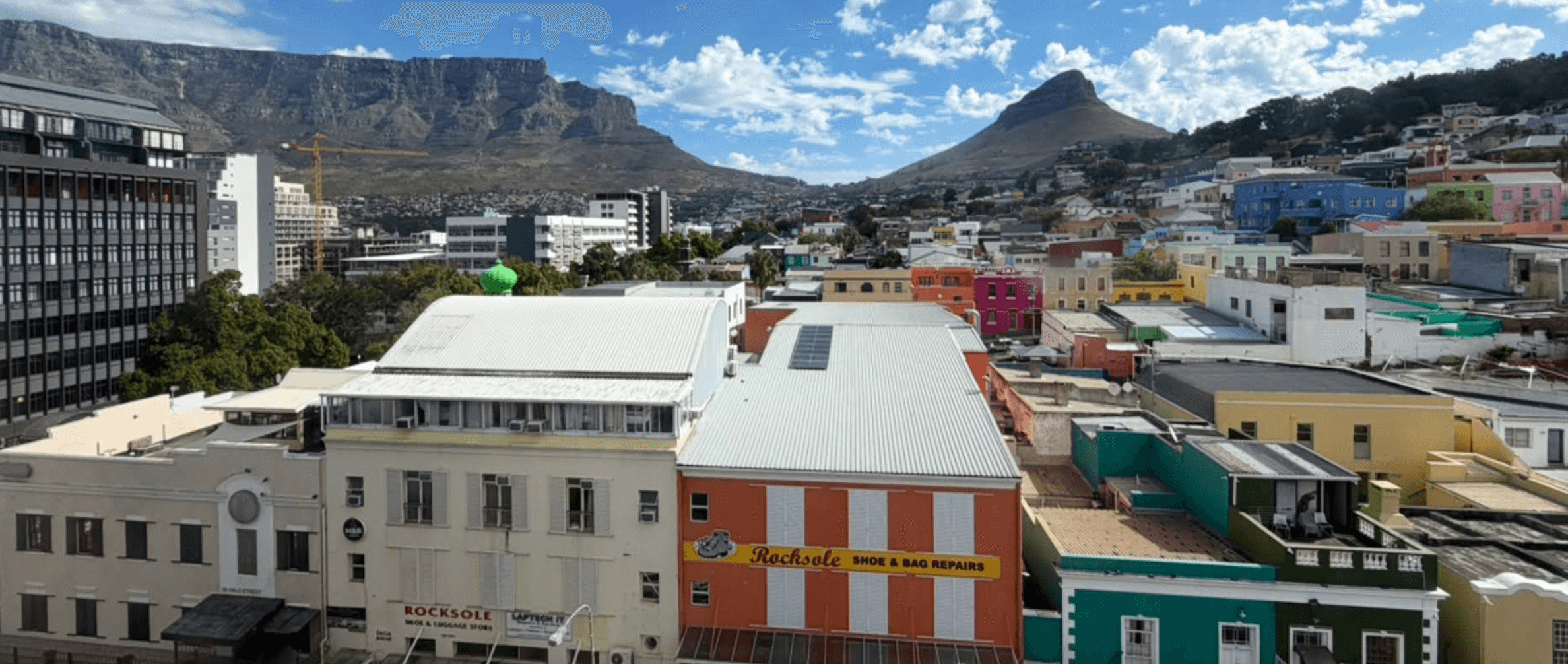
Bo-Kaap often appears in travel guides as Cape Town’s neighbourhood of colourful houses.
But colour is the easiest part of the story.
The area developed on the slopes of Signal Hill around 18th- and 19th-century homes and a Muslim community descended from enslaved and exiled people brought from Southeast Asia, Africa and the wider Indian Ocean world.
One of the early houses from the 1760s now contains the Iziko Bo-Kaap Museum, while Auwal Mosque became an important part of the neighbourhood’s Muslim history.
Bo-Kaap is also closely connected with Cape Malay cooking, family recipes and cultural continuity across generations.
One popular story deserves more caution: the claim that residents immediately painted their houses bright colours after restrictions on enslaved people wearing colourful clothing were removed is not well documented and should not be repeated as established fact.
Today, the neighbourhood faces a different pressure from heavy tourism, rising property values and displacement.
So Bo-Kaap deserves to be seen as a living neighbourhood rather than a free photo set. Those colourful façades belong to real family and city histories.
In short: 🌈 Colourful houses · 🕌 Auwal Mosque · 🏠 18th–19th-century architecture · 🍛 Cape Malay food · 📖 Enslaved and exiled communities · ⚠️ Overtourism and gentrification
🏡 For your stay: Bo-Kaap suits visitors looking for city history and walks around central Cape Town. Check the exact address, distances and your return plans before booking.
🚗 Getting around: plan your journeys in advance and compare the transport options for your route.
Services nearby





More verified places, new finds and round-ups go out in our Telegram channel.
Open Telegram